The Silent Cost of a Weak Online Presence


Many golf courses don’t notice the problem at first. The course is open, weekends are busy, and things appear to be working well enough. From the inside, the operation feels stable, even if margins are tight and days are long.
From the outside, the picture can look very different. Before booking a round, golfers increasingly check how a course appears online. They look at search results, photos, ratings, and reviews long before they ever consider calling the shop or opening a booking page. In many cases, the decision is already made by the time the course itself enters the picture.
Online reviews now function as a filter. A strong rating creates confidence and reduces friction, while a weaker one raises doubts instantly. Golfers rarely investigate deeply or try to understand context. If the overall impression feels negative or uncertain, they simply choose another option that feels safer.
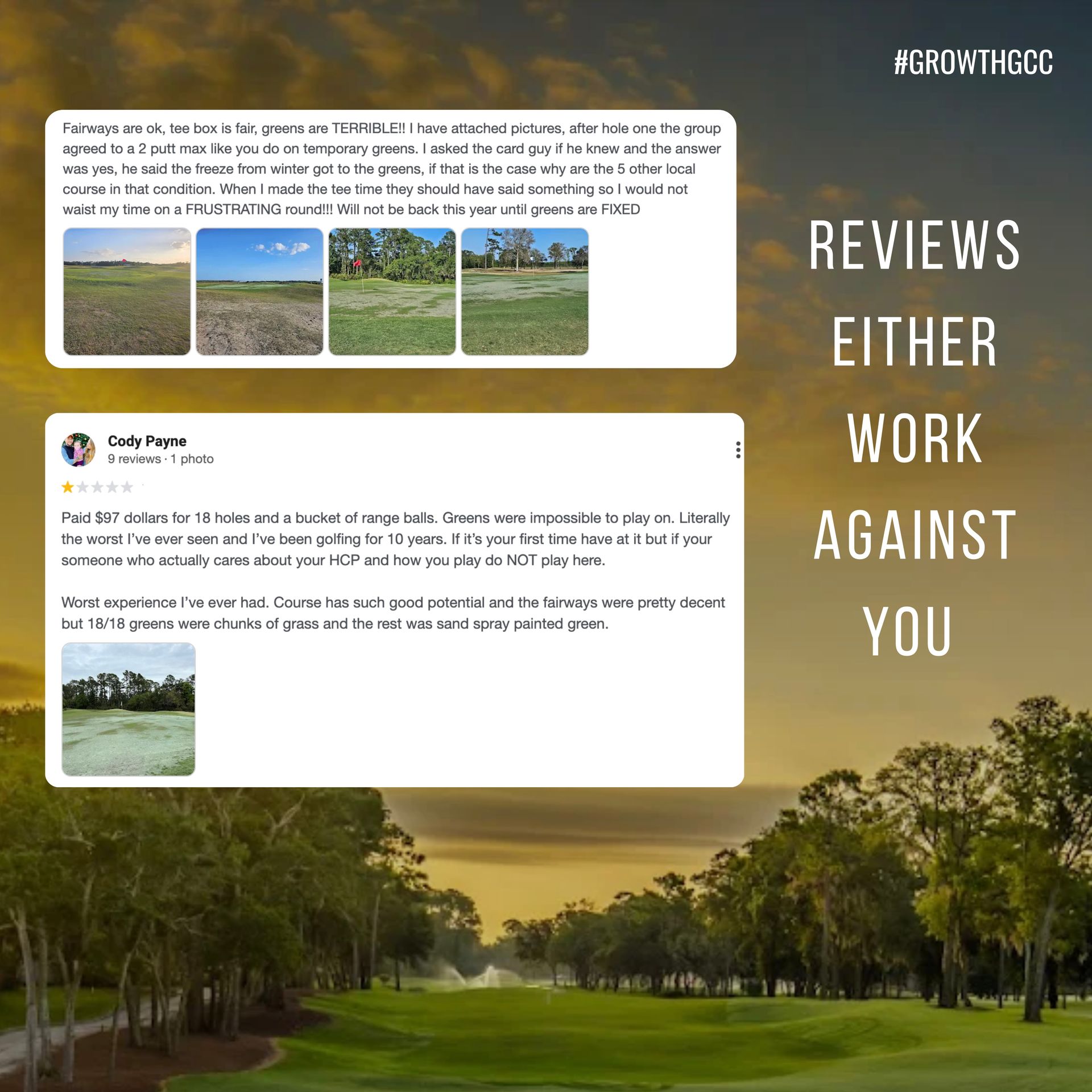
This creates a particular challenge for public golf courses, because reviews often reflect isolated moments rather than the full picture. A stretch of bad weather, stressed greens, a rushed check-in, or a crowded afternoon can all result in negative feedback. Those experiences are not unusual in golf operations, but once written down online, they persist far longer than the circumstances that caused them.
In many cases, the complaints themselves are understandable. A lot of criticism points to course conditions or service quality, areas where many public courses would like to invest more. The difficulty is that limited revenue makes it harder to maintain consistency, and inconsistency shows up quickly in the golfer experience.
Over time, this can turn into a cycle that is difficult to break. Tight finances limit maintenance and staffing. The experience suffers as a result. Reviews reflect that decline, which discourages new bookings and repeat play. Fewer rounds lead to even tighter margins, and the cycle reinforces itself without any single decision causing it directly.
This is why online reputation is not simply a marketing issue. It sits at the intersection of operations, demand, and economics. Reviews influence who books, booking patterns affect revenue, and revenue determines how much a course can reinvest into the product itself. Ignoring that connection does not remove its impact.
Courses cannot control what individual golfers say, but they can absolutely influence who leaves a review and when. Most satisfied players never think to leave feedback unless they’re prompted, while frustrated players are far more likely to act on their own. When courses don’t guide that process, reviews skew negative and perception drifts away from the reality on the ground.
Courses that manage this well tend to focus on timing and response rather than volume. They make it easier for golfers to share positive experiences when things are going well, and they provide channels for feedback to be addressed privately when something goes wrong. Over time, that changes the tone of what appears online without trying to silence criticism.
The importance of this has increased as reviews are now surfaced across more channels and interpreted in new ways. Golfers encounter them through search engines, map listings, booking apps, and increasingly through AI tools like ChatGPT and Gemini that summarize options and make recommendations on their behalf. In many cases, golfers never see the original source at all. Whether a course actively manages its online presence or not, that information is already shaping decisions every day.
Many negative reviews are better understood as symptoms rather than root causes. They often point to structural pressure in the business rather than isolated failures. Courses that see long-term improvement tend to address experience, pricing, demand patterns, and communication together instead of treating reputation as a standalone problem.
A simple way to assess the current situation is to look at recent reviews through the eyes of someone who has never played the course before. If those reviews inspire confidence, they are working in your favor. If they create hesitation, they are quietly costing more than most operators realize.
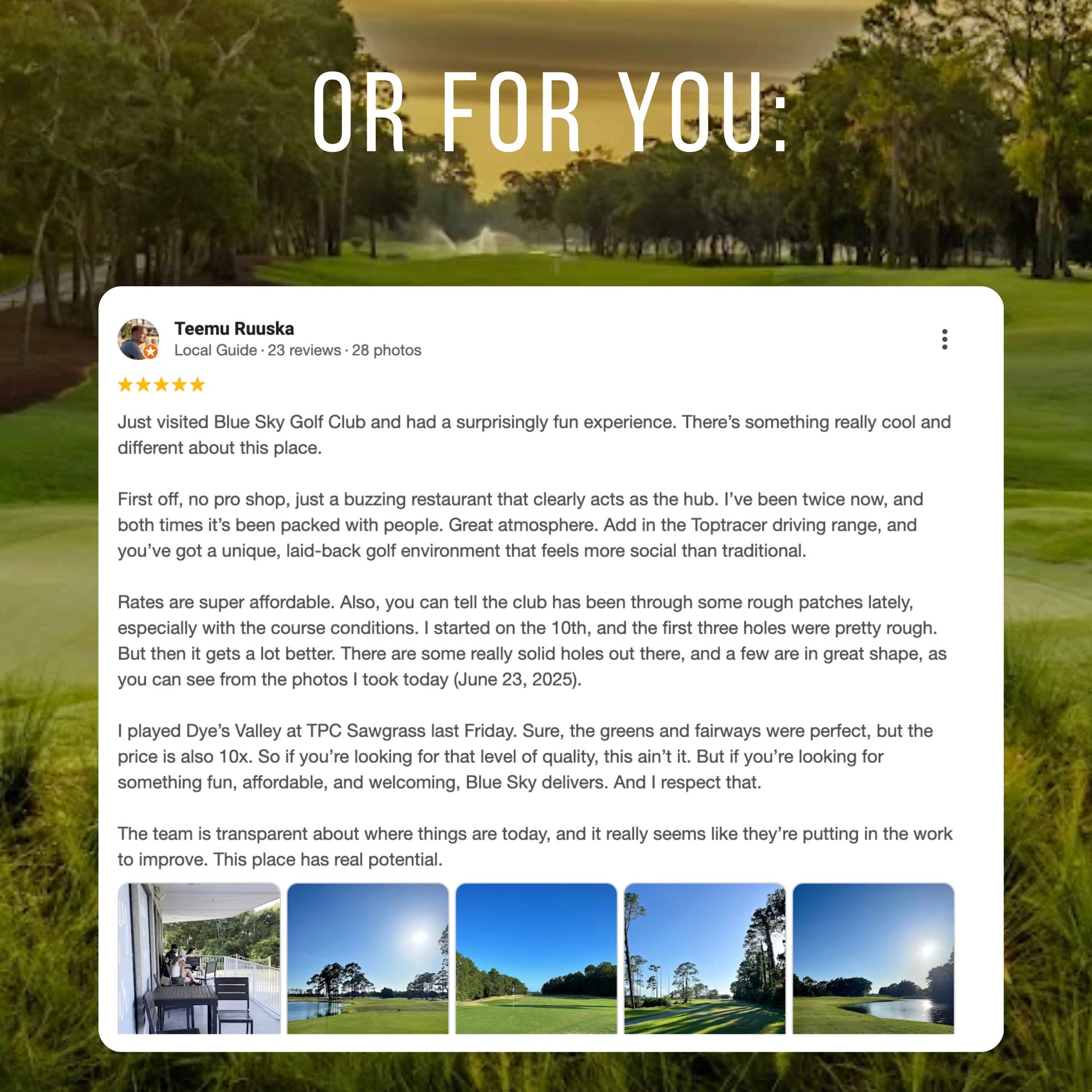
Your online presence is already telling a story about your course. Whether that story helps or hurts is largely determined by how deliberately it is managed. Below you have a few examples from the same course around the same time. Yes, it’s the same golf course, but the holes are different. And if you read my review, I’m pretty honest with my thoughts.
Teemu
Founder
Growth Golf & Country Club
Miami, FL, USA